
Development Preview
Learning Environment01
A structured learning experience
A learning environment designed to help children engage with foundational Mathematics and Language concepts through guided activities.
Technical specifications and functional architecture for ELP.
A learning engine designed to adapt activities and progression to each learner’s demonstrated understanding, using skill mastery patterns and learning performance.
Structured learning pathways covering foundational mathematics and language skills, organised around a registry of 26 learning skills.
Activity-based learning experiences that make foundational concepts easier to explore through practical interaction, feedback and guided practice.
A progression model that uses learner performance and mastery patterns to guide the next learning steps rather than relying only on fixed lesson sequences.
Planned coding experiences that introduce children to real programming concepts through approachable challenges, creative projects and AI-assisted learning.
An evolving approach to learning support, with the goal of making educational activities more responsive to individual ability, pace and progress.
Clean architectural patterns, modular design, and robust API endpoints built for maintainability.
Role-based access controls, encrypted data transmission, and strict principle-of-least-privilege practices.
Optimized for local connectivity conditions with offline data caching and mobile money integration models.
Designed around human workflows, prioritizing clarity, accessibility, and high adoption rates.
INSIDE ELP
Explore the learning experience, foundational skills and adaptive learning architecture being developed within ELP.
A learning environment designed to help children engage with foundational Mathematics and Language concepts through guided activities.
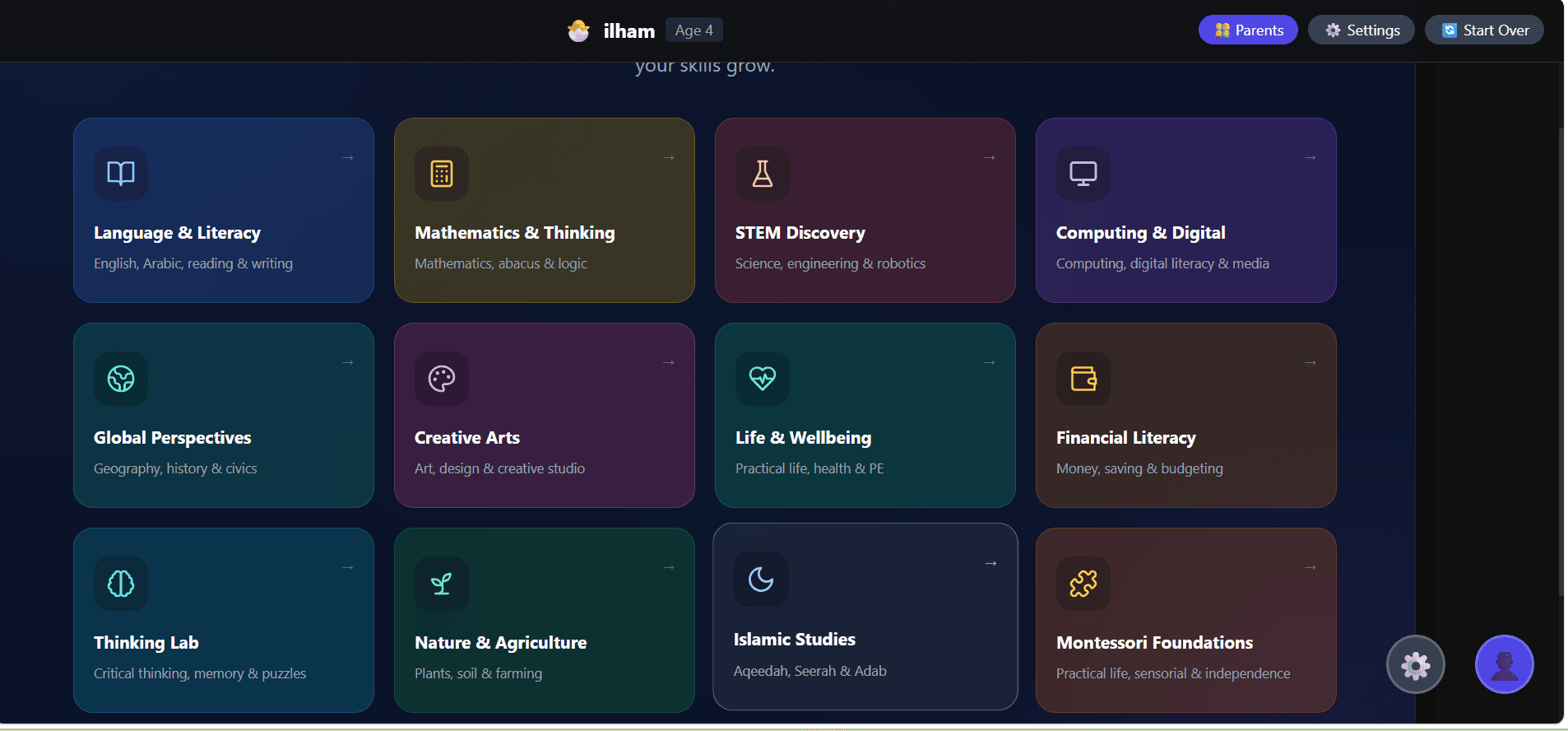
Five developed learning activities provide opportunities for guided practice and interaction with foundational concepts.
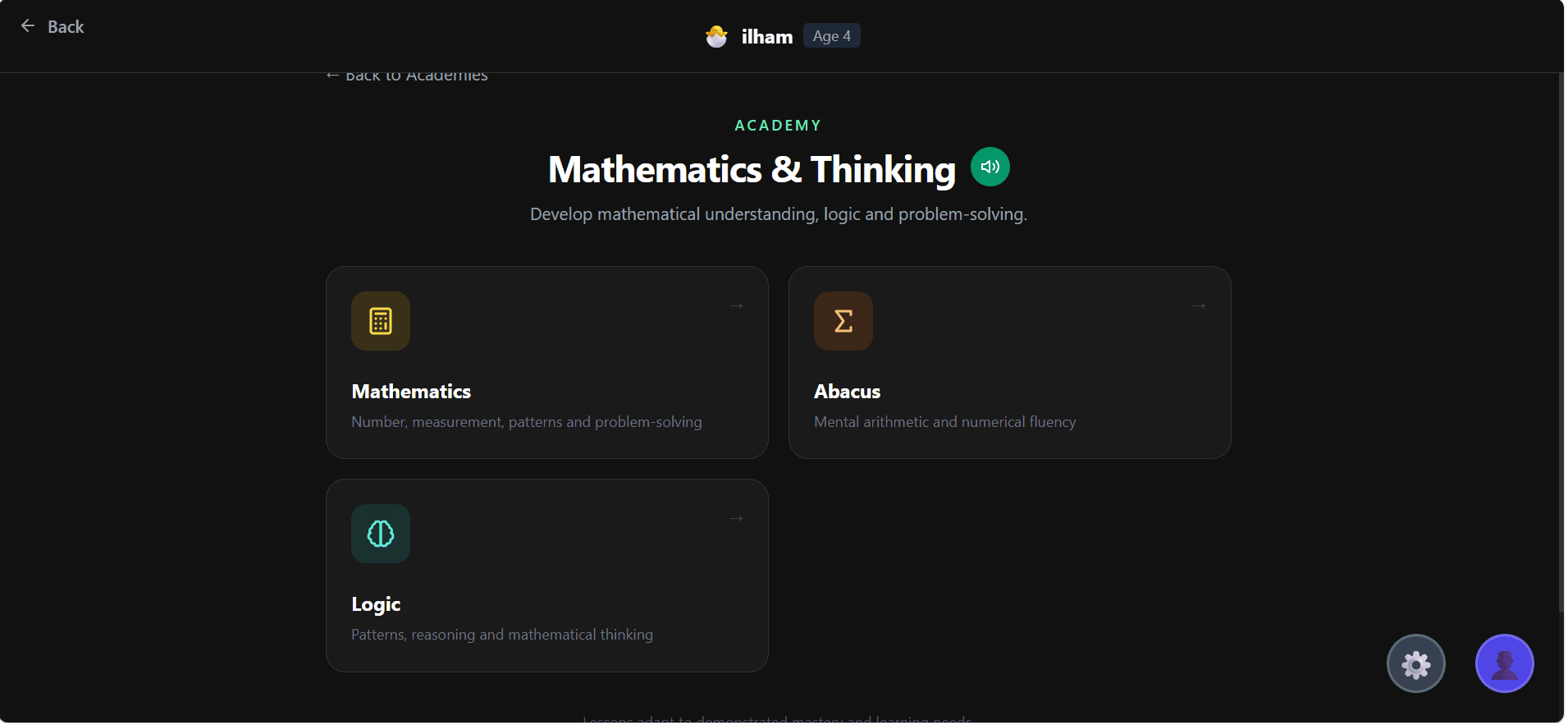
A registered collection of 26 Mathematics and Language skills supports structured learning pathways.
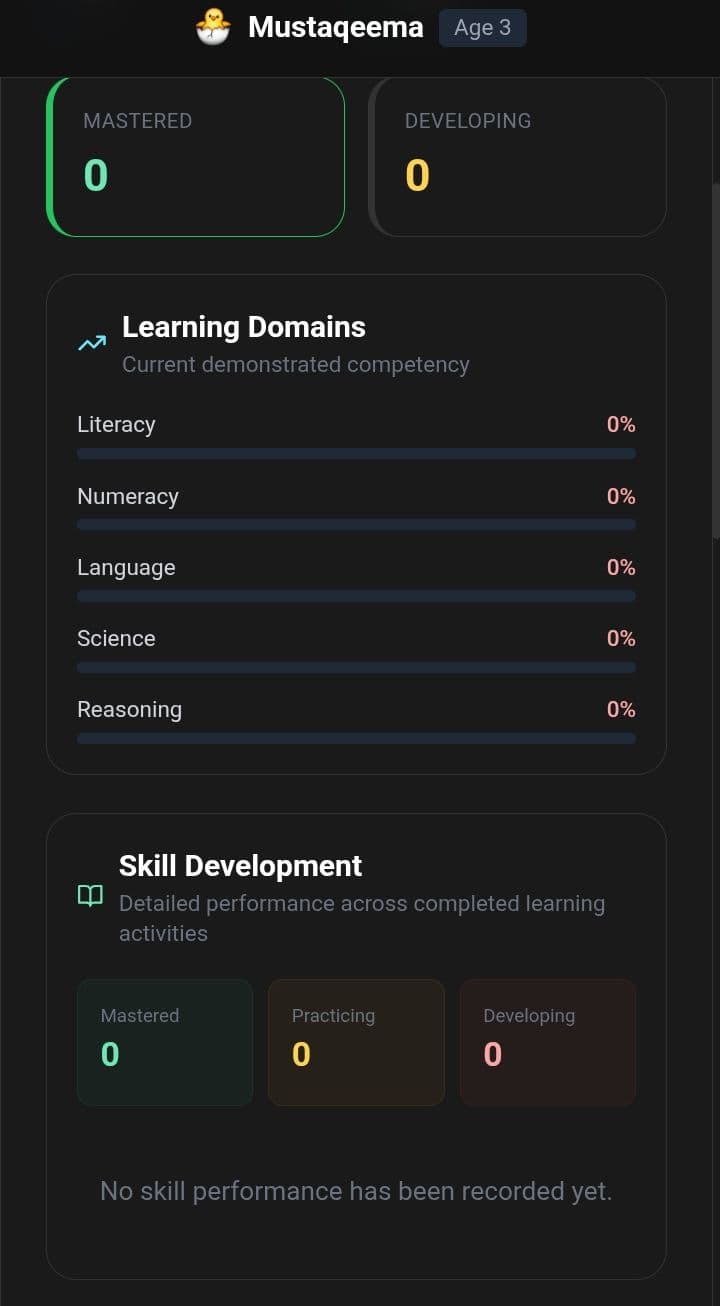
Learning logic uses performance and mastery patterns to inform progression, including adaptive subtraction.